William Galt – Sunday School, Book-Burning and Rebellion

Introduction – William Galt, A Forgotten Man
In Ireland we are blessed with a rich history and culture. However, this can also lead to many worthy men and women being largely forgotten.
This is especially true of those who lived and worked in villages and rural communities rather than big cities.
William Galt is one of these ‘forgotten men’. His educational endeavours deserve to be acknowledged.
Doagh and its Surroundings
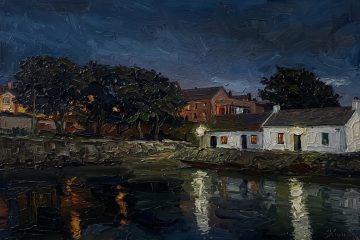
William Galt was born around 1751 in the small County Antrim village of Doagh, in the barony of Upper Antrim. The name comes from the Irish ‘dumhach‘ meaning ‘mound’. Doagh is 2 miles from Ballyclare and around 14 miles from Belfast.

Doagh is situated in the valley of the Six Mile Water. This river rises in the hills to the west of Larne and flows through County Antrim to Lough Neagh. It was originally called ‘Abhainn na bhFiodh’ – river of the woods. It got its new name, not due to its length, but from English soldiers who reckoned it was a six mile march from the garrison at Carrickfergus to the ford at Ballyclare.
The area has a long history of human habitation. Man-made structures such as raths (forts) and souterrains (stone-lined underground chambers) are prevalent in the region.
On the outskirts of the village, at a place named Lindsay’s Corner are the remains of an Anglo-Norman motte. These were artificial mounds surrounded by a defensive ditch or foss. On top of the flattened mound a fort or castle was constructed within a wooden palisade. This offered the Norman invaders protection and an excellent view of the surrounding countryside. Excavations here uncovered a large number of spearheads, coins and an urn containing human bones.
There is evidence of settlements at least from the Iron Age. The Bronze Age megalith known as the Holestone is situated nearby (see link below to the post on the “Holestone of Doagh – a history of mystery and marriage”).

The Origin of Doagh Village
In the 12th century, it is believed that the Agnews (probably from the Norman ‘Agneaux’) came to Ireland with the army of John de Courcy. This clan also had lands at Lochnaw, Wigtownshire, in south-west Scotland. They ‘acquired’ substantial lands in County Antrim, subsequently becoming Lords of Larne.
In 1622 Patrick Agnew built a castle at Kilwaughter, 3 miles south-west of Larne. By the mid 1700’s William Agnew obtained a lease of land from the Donegall family around Doagh and Ballyhamage area. Here he intended to establish a village.
This was an ideal location, at the cross-roads of the Ballymena-Belfast and Larne-Antrim roads. With the Six Mile Water nearby to provide water and power.
“This stream flows for 18 and a half miles through the fertile valley to which it gives its name… it affords a most valuable supply of water power to the very extensive bleach greens and paper and flour mills along its banks”
Ordnance Survey Memoirs 1832 Volume 29 County Antrim
Rapid Growth
In 1757 Agnew placed advertisements in the Belfast Newsletter offering parcels of land to rent at Doagh. The tenant could rent a house or build one on a plot of land. By the 1770’s, a village complete with tradesmen, a church and graveyard, and a bleaching green had developed. In the 1790’s the village had a few shops selling tea, sugar and drapery items as well as usual staples. Many grocery stores at the time also sold spirits such as whiskey, brandy, rum and gin.

The village also boasted an inn. This was not only for the benefit of locals but was a staging post on the road where travellers could rest and partake of refreshments while the horses were changed.
“At Doagh which is 10 miles from Randalstown, Carrickfergus, Belfast and Ballymena and 11 from Larne – I was not delayed a quarter of an hour but got on with a fine stout pair of horses. The little inn has a neat parlour, and the landlord Wil Harpur, is active, attentive and civil”
Daniel Beaufort from his travel diary 1787
The little village further expanded when the (impecunious) George Augustus, 2nd Marquis of Donegall moved into the nearby Fisherwick House.
In 1815 he established the Antrim Hunt which brought an influx of visitors to the area. So much so that a hotel and stables were built at 10 Main Street to provide accommodation.
The Influence of William Galt
The Reading Society
William Galt was employed as the village schoolmaster, but even from a young age, it seems he wished to pursue educational aims beyond the classroom.
“(Galt) was inspired with the notion of forming a book club and was supported in this endeavour by like-minded, enthusiastic men. In 1768 the Reading Society was established with some 30 members. Their objective appears to have been to promote the mutual attainment of knowledge”
www.doaghancestry.co.uk
This group of men together purchased a number of books on a wide range of subjects – history, geography, literature, science, mechanics and divinity. They also acquired a pair of 18” globes.
By reading and discussing different ideas and current affairs the Society helped bring knowledge and an appreciation of world affairs to the little village of Doagh. The Reading Society was so popular that similar organisations sprang up in the neighbouring towns and villages of Ballyclare, Ballynure, Roughfort and Parkgate.
It was not until 1780 however, that the Reading Society got permanent dedicated premises. The members petitioned the landowner, Edward Jones Agnew, for permission to build a schoolhouse. When he agreed, the Society raised the funds and had a 2-storey building erected in the Doagh. The ground floor served as a schoolroom and the upper level, accessed by an exterior staircase, became the home of the Reading Society. Here they housed their books and various educational apparatus. The building (though much extended) serves as Doagh Community Hall today.

This building was also used for visiting lecturers who presented talks or exhibitions on various topics. One such instructor was the Rev Porter from Greyabbey (see link to post “The Execution of the Rev James Porter below), who gave talks and demonstrations on natural philosophy and scientific and engineering advancements.

Education of Young People
However, William Galt was also concerned with the education of young people. Not all parents could afford to send their children to school. Hence, Galt established classes on a Sunday, the only day of the week the youngsters would not be required to work. Commencing in 1770, this is arguably the first Sunday School in Ireland, certainly among the earliest!

The School proved to be extremely popular and within a few years 200 pupils were attending from all over the neighbourhood. The Reading Society provided books and the teachers taught for free. Reading, writing and basic arithmetic were taught.

Many among the gentry however were concerned, if not directly opposed, to the Sunday School. For some it was deemed a threat to the ‘status quo’ for ordinary folk to be literate. Some landlords thought their tenants were reaching ‘above their station’.
William Galt faced much displeasure from the local nobility as his headstone records
He was the first to establish
a SUNDAY SCHOOL in Ireland
(which he did at Doagh in 1770
and had to bear with much opposition
and reproach from the prejudiced)
William Galt Headstone Insciption
By the 1790’s, William Galt had retired from teaching and was in the grocery and provisions business with a Mr Jamison. He resided in a thatched cottage on the corner of Main Street and Ballyclare Road. However, he was still involved in local education.

The Volunteers & Demands for Political Reform
In the 1770’s England was engaged in a war with the American colonists. This resulted in the removal of most of the English army from Ireland. The possibility of foreign invasion was a very real threat for the Anglo- Irish landowners. In response a voluntary, part-time militia was raised by the local landlords to combat any attack. This was a Protestant organisation with the gentry serving as officers. They wore uniforms made of Irish woven cloth to support local industry and paraded and drilled like a regular army. A company of Volunteers was formed in Doagh.
The late 18th century was a time of great political change and the birth of new liberal ideals, as witnessed by the French and American Revolutions. The spread of these idea found fertile ground in this mainly Presbyterian part of County Antrim, although it must be noted that the only church in Doagh at the time was Methodist. As non-members of the Established Church, Presbyterians laboured under certain restrictions, such as not having their marriages recognised as legal and being denied a career in politics. The people of County Antrim were ready for change and were prepared to act as we see from the endeavours of the Hearts of Steel (see link to post “Who were the Hearts of Steel?“)
The Volunteers gradually took on a more political role, as they voiced their wish for political reform, including Catholic emancipation. In Doagh such radical ideas had taken a firm hold, perhaps partly due to the Reading Society.
On 1st July 1790, after a celebration to celebrate the 100th anniversary of the Battle of the Boyne, a gathering was held in the premises of the Reading Society. This was chaired by the innkeeper William Harpur (mentioned by Beaufort). A number of toasts were raised including calls for equal representation and freedom of the press. Both the newly formed French National Assembly and President Washington were widely cheered.
The United Irishmen
In October 1791 in Belfast, a new militant organisation, composed of the more radical of the Volunteers, was formed – the United Irishmen. Their aims were to reform the political system, so that all men, regardless of creed, would have equal rights. Also, following the lead of the Americans, they wished to see a self-governing Ireland, free from English dictatorship.
On 20th December 1791 the Doagh branch of the United Irishmen was formed. William Giliand Owens of Holestone was chairman and William Galt acted as secretary. Here they resolved to bring about legislative change and suffrage for all, including ‘our Roman Catholick brethren’ and declared their support for the French Revolutionaries.
“….while its [Doagh’s] political activity is attested by the fact. That during the last thirty years of the last century, many of its inhabitants belonged to the Hearts of Steel organisation and that of the United Irishmen, or sympathised with their objectives”
W. S. Smith, Doagh and the First Sunday School in Ireland 1890

Government Reaction to the Activities of the Volunteers and the United Irishmen
The English government were becoming increasingly concerned about the organised, armed and outspoken Volunteers and the United Irishmen in particular. When a Volunteer demonstration was planned near Doagh for 14th September 1793, military forces were sent to supress it.
The 38th Regiment of the Fermanagh Militia, plus artillery and cannons were despatched from Belfast to prevent the gathering.
In 1793 the Society of United Irishmen was outlawed. Anyone suspected of being a member was arrested and prosecuted (see post William Orr, Trial and Execution 1797).
The Reading Society came under suspicion as being a body of men with liberal views. One of its members, John Alexander, a shoemaker, was jailed in September 1796. He was imprisoned for a year in Carrickfergus gaol, before being released.
On numerous occasions Galt’s commercial premises were damaged during raids by the local yeomen. His home was set alight and only saved from destruction by the quick actions of his young apprentice Kelly. The authorities were keen to curtail William’s influence in the neighbourhood and he had a few ‘close calls’ escaping arrest.
“One day, a number of those gentlemen (yeomen) entered the little village and at once directed their steps to William Galt’s house; but as they entered by the front, he escaped at the rear. They searched the house but Mr Galt was not to be found”
W. S. Smith, Doagh and the First Sunday School in Ireland, 1890

The Battle of Antrim
Having been denied just change by legal means the United Irishmen felt they had no choice but to demand reform by force.
Many men from the Doagh area took part in the Battle of Antrim on the side of the rebels on 7th June 1798. Facing a seasoned, well-trained army, the local farmers, armed mainly with pikes, were defeated.
The victorious government-backed yeomanry took vicious reprisals (see post Betsy Grey and the Battle of Ballynahinch).
The Reading Society Destroyed
In Doagh village many homes were destroyed. The Reading Society was targeted due to its reputation as a forward-thinking (therefore treasonous) organisation and its association with William Galt.
“One of the greatest acts of cultural vandalism in Ulster’s history occurred at this time when the Doagh book club was ransacked by the Carrickfergus Fencibles and its 1,500 volumes destroyed”
www.doaghancestry.co.uk
Among the yeomen following orders that day was Carrickfergus historian Samuel McSkimmin. An academic himself, McSkimmin’s words before his death in 1843 express his deep regret for the destruction and paint a vivid picture of events.
“….those in command of the party ordered the doors of the clubroom to be burst open; and the work of demolition at once commenced. The windows and entire furniture of the house were broken in pieces; a pair of elegant new globes smashed to atoms; the library shutters, enclosing the books and papers, beaten in with musket ends; and the books thrown into the street, forming a huge pile, were set on fire to be burned… Never before nor since, did I return home with a heavier heart”
Samuel McSkimmin

Reaction of the Doagh Inhabitants
The inhabitants of Doagh however, were not deterred. Funds were raised and the building was restored (some damage to the bookcases was left as a reminder). Over time the stock was replenished. By the 1830’s the library contained over 800 tomes.
“In 1798 their library room was burned by the king’s troops, in consequence of the active part the people (took) in the rebellion of that year. It was, however, rebuilt by the members… Its effects have proved most beneficial and are manifest in the tastes and pursuits of the people. A strong spirit for acquiring knowledge has been excited by it”
Lieutenant Edward Durnford, Statistical Report October 1832
“The members of the Doagh Book Club were not defeated by the destruction of their library. In the same year they, and their friends, subscribed generously to the repair of Mr Galt’s house and the refurnishing of the library. Within a few years the wreckage was no longer visible, except for the marks made by the muskets on the shutters”
Robert Armstrong, Through the Ages to Newtownabbey, 1979

The Legacy of William Galt
William Galt died on Tuesday 7th January 1812 aged 61. His large funeral was led by the children of the Sunday School. William was laid to rest in Kilbride Cemetery on the Moyra Road.
In 1842 a headstone was erected which records the respect and admiration with which William Galt was held.


No better tribute to the efforts of schoolmaster William Galt and his achievements can be found other than that in the records of the Ordnance Survey Memoirs –
“The grange (of Doagh) is generally, and with reason, considered as the most enlightened in the county. There are few, if any, of its population who cannot read, and the majority of the males can also write…
The children are allowed to remain longer at school than is usual, and there is, in the village of Doagh a night school for adults. The education thus afforded and the information acquired is permanently preserved and still further improved by study”
Ordnance Survey Memoirs
Related Posts
The Holestone of Doagh – A History of Mystery & Marriage

The Execution of Rev James Porter

Who were the Hearts of Steel?

William Orr – Trial and Execution 1797

Betsy Gray and the Battle of Ballynahinch

Sinclair Kelburn – The Tale of the Minister with a Musket

Help Us Find New Readers
Belfast Entries is hobby website produced entirely by a retired husband & wife featuring articles on our shared history, memories and entertaining stories of our past. The stories are free to all. If you like our posts please help us to grow our readership by sharing the posts. A growing readership would be very much appreciated.
If you enjoy Belfast Entries please consider a small donation
If you wish to To help us meet website creation/ maintenance costs please click the coffee cup below to learn how to make a small donation. Please note that every contribution is valued and that we will acknowledge your contribution below (forename only or “Anonymous” if you prefer).

Donations this month 3
Thank you Damian
Thank you Sinead
Thank you R. Meharg
We had 2 donation last month.
Copyright Notice
Belfast Entries posts & photos are our intellectual property and copyrighted to us. Where we use photos that do not belong to us, it is because we believe them to be in the public domain or shared under a Creative Commons licence with appropriate attribution. None of our content or images can be used without our consent. Note that a link to our Copyright & Takedown notice is included in the website footer on all pages.



0 Comments